Aristocrats
Portugal emerged as a Country is 1143, after a 15 year rebellion by D. Afonso Henriques (Afonso I). Afonso Henriques defeated his mother Countess Teresa of Portugal, regent of the County ( Condado) of Portugal and loyal to the Kingdom of Leon, at the battle of S. Mamede near the town of Guimaraes. in June 1128.
Source https://portugal.com/portugal/information/history.
The Golden Age
For two centuries, Portugal lived in what was known as “the golden centuries of discoveries”. This was the apogee of Portugal as a country, and forever the benchmark of its culture.
The age of discoveries, fueled by the rise of the “dynamic thinkers” of the new Portugal, started with the Kingdom of Dom Joao I (John I). On July 25, 1415, a Portuguese fleet with King Joao I and his sons Prince Duarte, Prince Henry “The Navigator”, and Prince Afonso, along with Supreme Constable Nuno Alvares Pereira, set out to conquer North Africa starting with the coastal towns of Ceuta and Tangier. These towns were bustling trading centers. On August 21st, Ceuta and Tangier were conquered by the Portuguese.
In early 15th century, Henry the Navigator founded the famous sailing school in Sagres and from there launched several sea expeditions which culminated in the discovery of the Archipelagos of Madeira Island and the Azores islands. Along with the invention of the sextant and major innovations in boat and sail design, Henry the Navigator made Portugal’s empire expansion possible and led to great advances in geographic knowledge. The discoveries were financed by the wealth of the Order of Christ, founded by King Dom Dinis (D. Dennis) in the 13th century for the Templar knights, who found refuge in Portugal after being pursued all over Europe. The Templars had an interest in financing such expeditions, as they were searching for the legendary Christian Kingdom of Prester John.
In 1434, Gil Eanes, an experienced sailor under Henry’s watch, was the first sailor to round Cabo Bojador (Cape Bojador), a headland on the northern coast of West Sahara at latitude 27° North. Gil Eanes made several trips up and down the coast of Africa, thus marking the beginning of the Portuguese exploration of Africa.
One of the most remarkable achievements of the Portuguese sailors, was the rounding of the Cabo da Boa Esperanca (Cape of Good Hope) by Bartolomeu Dias (Bartholomew Dias) in 1487. The cape was named because it was hoped that India and its coveted spices would be found soon, therefore circumventing the land routes.
Other remarkable sailing feats in the 15th century included: Pero de Barcelos and Joao Fernandes Lavrador exploration of North America, Pero de Covilha reaching Etiopia in search of the mythical kingdom of Prester John, and the arrival of Vasco da Gama, one of the most successful sailors in history, at India on May 20, 1498.
In 1500, Pedro Alvares Cabral landed in Brazil, and in 1510, Afonso de Albuquerque conquered Goa in India. Goa, Damaou and Diu remained Portuguese colonies until they were annexed by India in 1961.
In 1578, tragedy struck, and forever altered the history of Portugal. King Sebastiao (Sebastian), at the ripe age of 19, decided to augment the Portuguese empire in North Africa, against the advice of the nobles. King Sebastian himself led the forces and left on a foggy morning from Lisbon to never be seen again. He left no heir to the throne, and because Philip II of Spain was the son of a Portuguese princess, the Spanish king became Philip I of Portugal in 1581. Portugal maintained its autonomy including law, currency, colonies and government under a personal treaty between the two countries. Portugal was further ruled by Philip III who tried to force integration, thus attacking and alienating the Portuguese nobles who were not in favor of the integration.
On December 1, 1640, Duque de Braganca (Duke of Braganca), a royal family descendent, led a revolution and, after several years, regained control of Portugal. The Duke of Braganca became Joao IV of Portugal (John IV).
Artisans

Portugal has many state of the art factories that date back to more than a century.
The artisans and manufacturers of Portugal rival any of their counterparts, in the same sector, in the rest of Europe, albeit, that these factories remain one of the Continent’s best kept secrets.
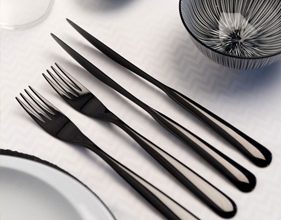
The cutlery pictured above is manufactured by a family owned business called Herdmar that dates back to 1911. Visit herdmar.com/us/en/cutlery you will be impressed.
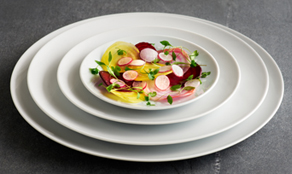
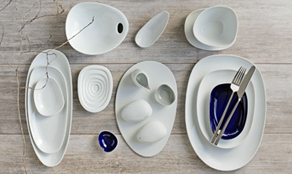
I am a great admirer of porcelain made in Portugal by the leading European Manufacturer Costa Verde. Visit their https://costa-verde.com their collections are magnificent.
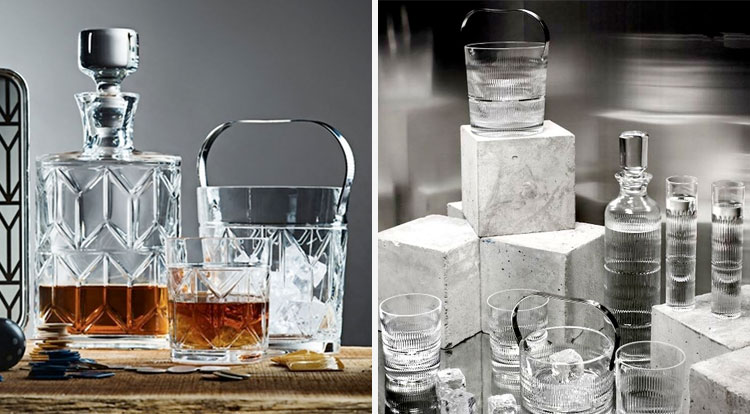
Portuguese crystal is very beautiful and World renowned, it started in a factory making chandeliers.
Founded in 1944, Alcobaça Crystals manufactured chandeliers, sconces and glass for domestic use. Later, in the early 1970s, it began to produce high-quality handmade glass with the help of molds and blow rods and following the old practices of experienced craftsmen. Atlantis crystal stands out for its beauty, weight, brilliance, transparency and durability, and their pieces are coveted around the world by those who seek the best glasswork. The brand’s luxurious products are executed with great skill—using sand, lead oxide, sodium, potassium and borax, among other materials. It is a painstaking, stressful process under temperatures that can reach up to 2,000 degrees Fahrenheit.
Source https://azureazure.com. Visit this site for Atlantis Crystal.

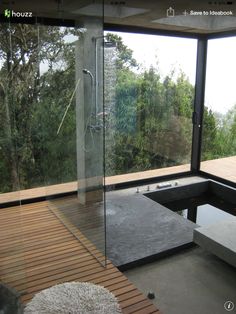
Portugal is a renowned manufacturer of bathroom ware. The Portuguese factories lead in the most exquisite design and craftmanship.
I am proud to introduce to you Sanitana. https://www.sanitana.com. I will write a separate page on my website just for bathrooms and Sanitana will feature prominently.

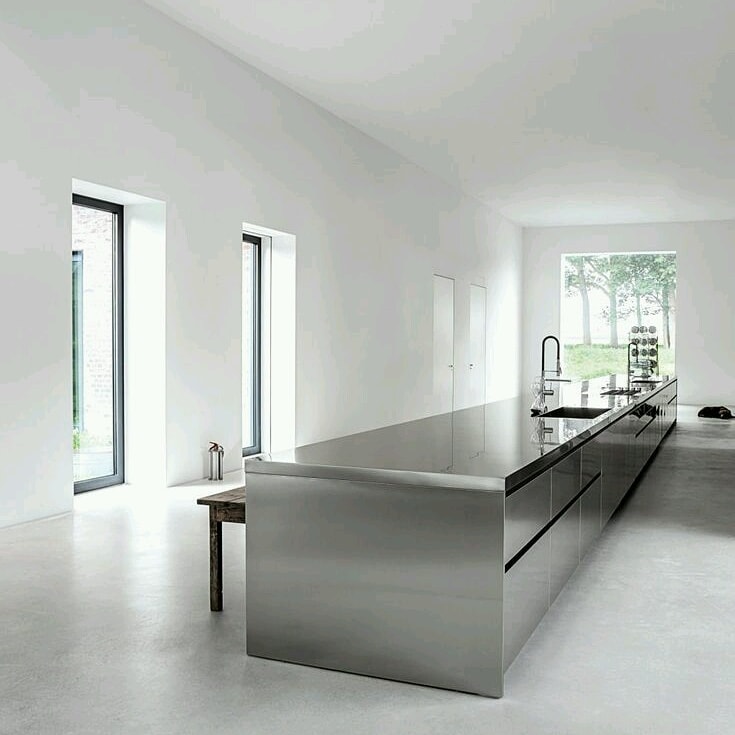
Kitchen Sinks in stainless steel
Portugal is also a leading manufactured of kitchen sinks with extensive ranges that compete very favorably with manufacturers in Italy and in Holland.
FRESH RELEVANT INFORMED
Simplicity is the ultimate sophistication
Leonardo da Vinci
Stay well and we will talk soon

